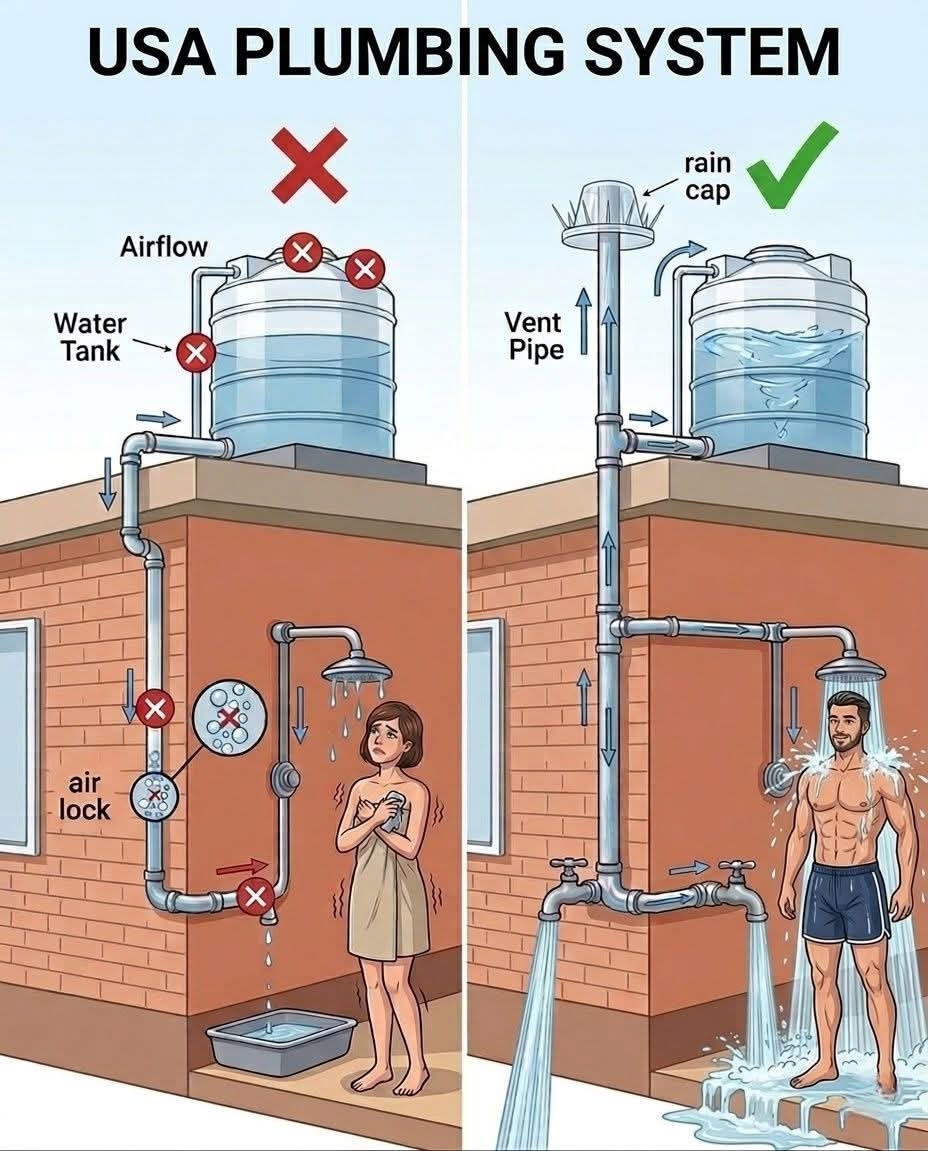
• What’s Wrong (Left Side ❌)

    No proper vent pipe → Air can’t enter system, causing air lock

    Water flow becomes weak & uneven → shower pressure drops

    Vacuum forms inside pipes → interrupts smooth flow

    Tank airflow blocked → water doesn’t discharge properly

    Leaking & gurgling issues → long-term plumbing damage

    👉 Result: Low pressure, unstable flow, and user discomfort

    ✅ What’s Right (Right Side ✔️)

    Dedicated vent pipe installed → allows free air movement

    Rain cap on top → protects from dirt & rain entry

    Balanced air pressure → smooth and strong water flow

    No air lock issue → consistent shower performance

    Proper pipe routing → efficient and long-lasting system

    👉

    #PlumbingTips #WaterPressure #DIYFix #ConstructionLife #HomeImprovement #PlumbingWork

    What’s Wrong (Left Side ❌)No proper vent pipe → Air can’t enter system, causing air lockWater flow becomes weak & uneven → shower pressure dropsVacuum forms inside pipes → interrupts smooth flowTank airflow blocked → water doesn’t discharge properlyLeaking & gurgling issues → long-term plumbing damage👉 Result: Low pressure, unstable flow, and user discomfort✅ What’s Right (Right Side ✔️)Dedicated vent pipe installed → allows free air movementRain cap on top → protects from dirt & rain entryBalanced air pressure → smooth and strong water flowNo air lock issue → consistent shower performanceProper pipe routing → efficient and long-lasting system👉#PlumbingTips #WaterPressure #DIYFix #ConstructionLife #HomeImprovement #PlumbingWork
    0 Comments 0 Shares 359 Views 0 Reviews
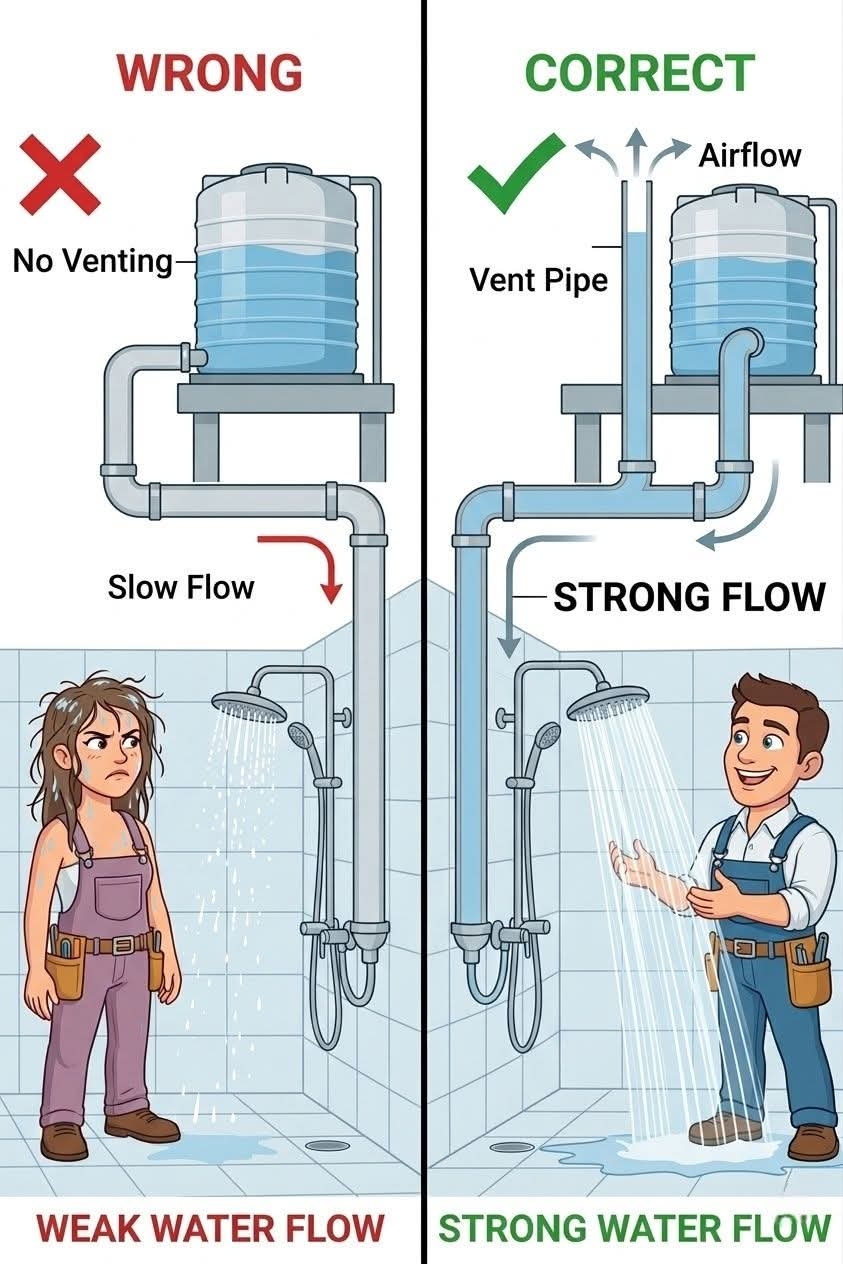
  • Comparing water tank ventilation systems: Wrong vs. Correct setup.

    The wrong setup has no venting, leading to airlock and weak water flow (indicated by the red arrow). In contrast, the correct setup includes a vent pipe to allow proper airflow, ensuring a strong and consistent water flow (indicated by the blue arrow)."

    Some related hashtags could be:

    #plumbing #watertank #ventsystem #waterflow #construction #engineering #maintenance #diy #HomeImprovementNYC


    https://www.facebook.com/share/14ZyQAyg6qv/

    Comparing water tank ventilation systems: Wrong vs. Correct setup.The wrong setup has no venting, leading to airlock and weak water flow (indicated by the red arrow). In contrast, the correct setup includes a vent pipe to allow proper airflow, ensuring a strong and consistent water flow (indicated by the blue arrow)."Some related hashtags could be:#plumbing #watertank #ventsystem #waterflow #construction #engineering #maintenance #diy #HomeImprovementNYChttps://www.facebook.com/share/14ZyQAyg6qv/
    0 Comments 0 Shares 334 Views 0 Reviews
  • Certainly, let's break down the diagram you provided.

    + Overall Function:
    This diagram illustrates a wood-burning stove with a heat distribution system. The primary goal is to efficiently capture the heat generated by the stove and distribute it throughout the room or even multiple rooms.

    + Components:
    1. Wood-Burning Stove: This is the core of the system, where wood is burned to produce heat.
    2. Chimney: A vertical flue that carries smoke and combustion gases away from the stove and out of the building.
    3. Heat Exchanger: A device that transfers heat from the hot exhaust gases to the surrounding air. In this diagram, it appears to be integrated into the stove itself.
    4. Ducting System: A network of pipes or ducts that carry the heated air from the heat exchanger to different areas of the building.
    5. Supply Vents: Outlets in various rooms where the heated air is released.
    6. Return Vents: Vents that draw cool air from the room back to the heat exchanger, where it is warmed and circulated again.
    7. Fan (Optional): A fan can be used to boost the circulation of heated air through the ducting system.

    + How it Works:
    1. Combustion: Wood is burned in the stove, generating heat and producing smoke and combustion gases.
    2. Heat Exchange: The heat exchanger captures the heat from the flue gases and transfers it to the surrounding air.
    3. Air Circulation: The heated air is drawn into the ducting system through the return vents and distributed to the supply vents in different rooms.
    4. Room Heating: The heated air from the supply vents warms the rooms, creating a comfortable environment.
    5. Smoke and Gas Exhaust: The smoke and combustion gases are channeled up the chimney and expelled outside.

    + Benefits:
    - Efficient Heat Distribution: The system effectively distributes heat throughout the building, ensuring even warmth.
    - Improved Comfort: By providing consistent heat, the system can enhance comfort levels in the home.
    - Fuel Efficiency: By capturing and utilizing the heat from the flue gases, the system can improve the overall efficiency of the wood-burning stove.

    + Additional Notes:
    - The specific design and configuration of the system can vary depending on the size of the building, the desired heating capacity, and individual preferences.
    - Proper installation and maintenance are essential for optimal performance and safety.
    - It's important to ensure adequate ventilation in the rooms where the stove and heat exchanger are located to prevent the buildup of harmful gases.

    I hope this detailed explanation is helpful!

    #HomeConstruction #AnatomyOfAHome #DreamHomeInTheMaking #NewBuild #TexasRealEstate #Framing #BuildWithConfidence #architecture
    #interiordesign #home #homes #house #houses #building #buildings #design #styles #residential #residentialarchitecture #commercial #commercialarchitecture #industrial
    #industrialarchitecture #architecturelovers #architectureporn #landscapearchitecture

    https://www.facebook.com/share/p/128iCwQ2HhS/

    Certainly, let's break down the diagram you provided. + Overall Function: This diagram illustrates a wood-burning stove with a heat distribution system. The primary goal is to efficiently capture the heat generated by the stove and distribute it throughout the room or even multiple rooms. + Components: 1. Wood-Burning Stove: This is the core of the system, where wood is burned to produce heat. 2. Chimney: A vertical flue that carries smoke and combustion gases away from the stove and out of the building. 3. Heat Exchanger: A device that transfers heat from the hot exhaust gases to the surrounding air. In this diagram, it appears to be integrated into the stove itself. 4. Ducting System: A network of pipes or ducts that carry the heated air from the heat exchanger to different areas of the building. 5. Supply Vents: Outlets in various rooms where the heated air is released. 6. Return Vents: Vents that draw cool air from the room back to the heat exchanger, where it is warmed and circulated again. 7. Fan (Optional): A fan can be used to boost the circulation of heated air through the ducting system. + How it Works: 1. Combustion: Wood is burned in the stove, generating heat and producing smoke and combustion gases. 2. Heat Exchange: The heat exchanger captures the heat from the flue gases and transfers it to the surrounding air. 3. Air Circulation: The heated air is drawn into the ducting system through the return vents and distributed to the supply vents in different rooms. 4. Room Heating: The heated air from the supply vents warms the rooms, creating a comfortable environment. 5. Smoke and Gas Exhaust: The smoke and combustion gases are channeled up the chimney and expelled outside. + Benefits: - Efficient Heat Distribution: The system effectively distributes heat throughout the building, ensuring even warmth. - Improved Comfort: By providing consistent heat, the system can enhance comfort levels in the home. - Fuel Efficiency: By capturing and utilizing the heat from the flue gases, the system can improve the overall efficiency of the wood-burning stove. + Additional Notes: - The specific design and configuration of the system can vary depending on the size of the building, the desired heating capacity, and individual preferences. - Proper installation and maintenance are essential for optimal performance and safety. - It's important to ensure adequate ventilation in the rooms where the stove and heat exchanger are located to prevent the buildup of harmful gases. I hope this detailed explanation is helpful! #HomeConstruction #AnatomyOfAHome #DreamHomeInTheMaking #NewBuild #TexasRealEstate #Framing #BuildWithConfidence #architecture #interiordesign #home #homes #house #houses #building #buildings #design #styles #residential #residentialarchitecture #commercial #commercialarchitecture #industrial #industrialarchitecture #architecturelovers #architectureporn #landscapearchitecture https://www.facebook.com/share/p/128iCwQ2HhS/

    0 Comments 0 Shares 5K Views 0 Reviews
  • In 1914, Ernest Holmes transformed the world of roadside assistance with the invention of the first tow truck, known as the "Holmes Wrecker." Operating out of Chattanooga, Tennessee, Holmes modified a 1912 Cadillac by adding a pulley and crane system, enabling it to safely recover vehicles that had broken down or been in accidents. This innovation came at a time when automobiles were becoming more widespread, yet there were few systems in place for vehicle recovery. Holmes’s creation filled a critical gap in the growing automotive industry, offering a practical solution for stranded drivers…

    Holmes's invention not only simplified the process of towing but also set the foundation for the future of the industry. The robust construction and efficient design of the Holmes Wrecker provided a reliable method for recovering vehicles, making it an indispensable tool for motorists and businesses alike. As the popularity of automobiles surged in the early 20th century, so did the need for towing services, leading to the rapid growth of an entirely new sector within the transportation industry…

    Today, the legacy of the Holmes Wrecker endures in modern tow trucks, which often incorporate similar mechanical principles in their design. The 1915 Holmes Wrecker, captured in a photograph by Jonas Brock, stands as a testament to the innovation and ingenuity of the early automotive era. It reminds us of how one man’s vision and resourcefulness helped shape an industry that continues to play a vital role in the lives of motorists around the world…

    https://www.facebook.com/share/p/18hP3JjiiJ/
    In 1914, Ernest Holmes transformed the world of roadside assistance with the invention of the first tow truck, known as the "Holmes Wrecker." Operating out of Chattanooga, Tennessee, Holmes modified a 1912 Cadillac by adding a pulley and crane system, enabling it to safely recover vehicles that had broken down or been in accidents. This innovation came at a time when automobiles were becoming more widespread, yet there were few systems in place for vehicle recovery. Holmes’s creation filled a critical gap in the growing automotive industry, offering a practical solution for stranded drivers… Holmes's invention not only simplified the process of towing but also set the foundation for the future of the industry. The robust construction and efficient design of the Holmes Wrecker provided a reliable method for recovering vehicles, making it an indispensable tool for motorists and businesses alike. As the popularity of automobiles surged in the early 20th century, so did the need for towing services, leading to the rapid growth of an entirely new sector within the transportation industry… Today, the legacy of the Holmes Wrecker endures in modern tow trucks, which often incorporate similar mechanical principles in their design. The 1915 Holmes Wrecker, captured in a photograph by Jonas Brock, stands as a testament to the innovation and ingenuity of the early automotive era. It reminds us of how one man’s vision and resourcefulness helped shape an industry that continues to play a vital role in the lives of motorists around the world… https://www.facebook.com/share/p/18hP3JjiiJ/
    0 Comments 0 Shares 2K Views 0 Reviews
  • The Chevrolet Turbo Titan III was a groundbreaking concept truck from 1965, powered by a GT-309 gas turbine engine, showcasing futuristic design and technology for its time, although it never entered production. It featured a streamlined, Space Age-styled cabover design with fiberglass and steel construction, highlighting GM's experimental ventures into turbine-powered vehicles.

    https://www.facebook.com/share/p/15Uq8h8EKy/
    The Chevrolet Turbo Titan III was a groundbreaking concept truck from 1965, powered by a GT-309 gas turbine engine, showcasing futuristic design and technology for its time, although it never entered production. It featured a streamlined, Space Age-styled cabover design with fiberglass and steel construction, highlighting GM's experimental ventures into turbine-powered vehicles. https://www.facebook.com/share/p/15Uq8h8EKy/
    0 Comments 0 Shares 2K Views 0 Reviews
  • https://www.omnicalculator.com/construction/framing
    https://www.omnicalculator.com/construction/framing
    WWW.OMNICALCULATOR.COM
    Framing Calculator | Stud count
    With our framing calculator, you can easily compute the number of studs needed to build a given section of wall.
    0 Comments 0 Shares 842 Views 0 Reviews
  • Modular tiny homes prefabricated

    ADVANTAGES OF OUR HOUSES
    Energy efficiency Affordable price Stylish design Fast construction Compact size
    oleksandrikodon@gmail.com
    Modular tiny homes prefabricated ADVANTAGES OF OUR HOUSES Energy efficiency Affordable price Stylish design Fast construction Compact size oleksandrikodon@gmail.com
    0 Comments 0 Shares 941 Views 0 Reviews
  • Construction technology
    Construction technology
    0 Comments 0 Shares 1K Views 0 Reviews
  • How to Fix a Toilet | HomeTips
    Expert advice on how to repair a toilet, how to fix a clogged toilet, including using a snake or plunger to remove clogs, and stopping a toilet that runs #plumbing #plumber #leakyfaucet #drippingtoilet #cloggeddrain #waterdamage #sewerbackup #pipeburst #flooding #homerepai #diy #homeimprovement #handyman #contractor #newconstruction #remodeling #bathroomremodel #kitchenremodel #renovation #homeowner #homemaintenance #housecall

    https://www.facebook.com/share/p/DREQa8RfbGAabeUy/?mibextid=xfxF2i
    How to Fix a Toilet | HomeTips Expert advice on how to repair a toilet, how to fix a clogged toilet, including using a snake or plunger to remove clogs, and stopping a toilet that runs #plumbing #plumber #leakyfaucet #drippingtoilet #cloggeddrain #waterdamage #sewerbackup #pipeburst #flooding #homerepai #diy #homeimprovement #handyman #contractor #newconstruction #remodeling #bathroomremodel #kitchenremodel #renovation #homeowner #homemaintenance #housecall https://www.facebook.com/share/p/DREQa8RfbGAabeUy/?mibextid=xfxF2i
    0 Comments 0 Shares 6K Views 0 Reviews