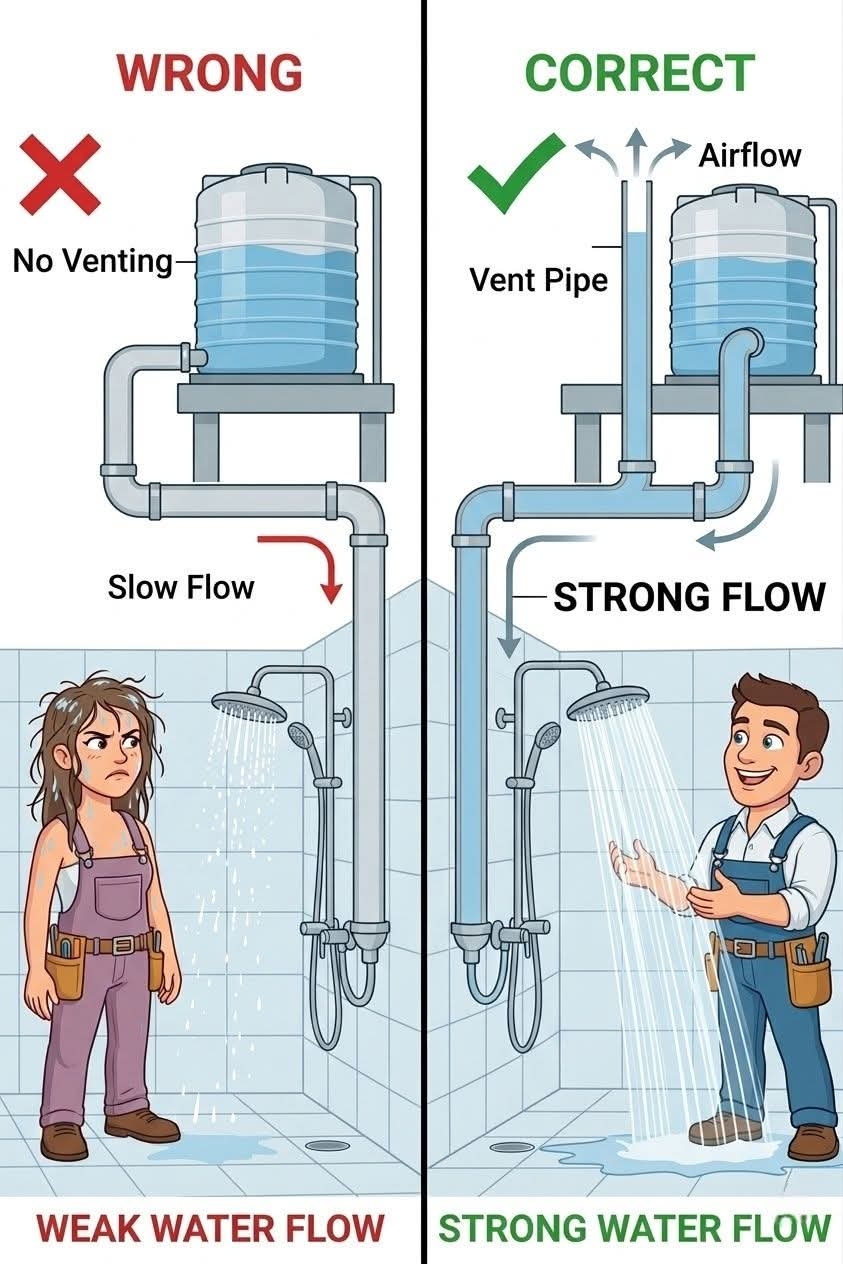
• Comparing water tank ventilation systems: Wrong vs. Correct setup.

    The wrong setup has no venting, leading to airlock and weak water flow (indicated by the red arrow). In contrast, the correct setup includes a vent pipe to allow proper airflow, ensuring a strong and consistent water flow (indicated by the blue arrow)."

    Some related hashtags could be:

    #plumbing #watertank #ventsystem #waterflow #construction #engineering #maintenance #diy #HomeImprovementNYC


    https://www.facebook.com/share/14ZyQAyg6qv/

    Comparing water tank ventilation systems: Wrong vs. Correct setup.The wrong setup has no venting, leading to airlock and weak water flow (indicated by the red arrow). In contrast, the correct setup includes a vent pipe to allow proper airflow, ensuring a strong and consistent water flow (indicated by the blue arrow)."Some related hashtags could be:#plumbing #watertank #ventsystem #waterflow #construction #engineering #maintenance #diy #HomeImprovementNYChttps://www.facebook.com/share/14ZyQAyg6qv/
    0 Comments 0 Shares 334 Views 0 Reviews
  • Understanding #Rainwater #HarvestingSystem.

    Here's a breakdown of the components and process:

    Core Components:
    ▪️ Rooftop: The primary collection surface for rainwater.
    ▪️ Gutter: Channels rainwater from the roof to the downspout.
    ▪️ Downspout: Directs rainwater from the gutter to the storage tank.
    ▪️ Filter: Removes debris and impurities from the rainwater.
    ▪️ Storage Tank: Stores collected rainwater.
    ▪️ Pump: Pumps water from the storage tank for distribution.
    ▪️ Distribution System: Delivers water to various points of use, such as toilets, washing machines, and gardens.
    ▪️ Overflow: Releases excess water when the tank is full.

    How it Works:
    1. Rainwater Collection: Rainwater falls on the rooftop and is channeled into the gutters.
    2. Water Diversion: The gutters direct the rainwater into the downspout.
    3. Filtration: The rainwater passes through a filter to remove debris and impurities.
    4. Storage: The filtered rainwater is stored in the underground tank.
    5. Water Usage: The stored rainwater can be used for various non-potable purposes, such as:
    - Toilet flushing
    - Laundry
    - Garden watering
    - Car washing
    6. Overflow: If the tank reaches capacity, excess water is released through the overflow pipe.

    Benefits of Rainwater Harvesting:
    ▪️ Water Conservation: Reduces reliance on municipal water supplies.
    ▪️ Reduced Water Bills: Can significantly lower water bills.
    ▪️ Environmental Benefits: Reduces stormwater runoff and helps recharge groundwater.
    ▪️ Improved Water Quality: Filtered rainwater is often cleaner than municipal water.

    Key Considerations:
    ▪️ Water Quality: Regular cleaning and maintenance of the storage tank and filters are essential to ensure water quality.
    ▪️ Local Regulations: Check local regulations regarding rainwater harvesting and water usage.
    ▪️ Tank Size: The size of the storage tank should be determined based on your water needs and local rainfall patterns.
    ▪️ Water Treatment: For potable use, rainwater may require additional

    #Inno

    Understanding #Rainwater #HarvestingSystem. Here's a breakdown of the components and process: Core Components: ▪️ Rooftop: The primary collection surface for rainwater. ▪️ Gutter: Channels rainwater from the roof to the downspout. ▪️ Downspout: Directs rainwater from the gutter to the storage tank. ▪️ Filter: Removes debris and impurities from the rainwater. ▪️ Storage Tank: Stores collected rainwater. ▪️ Pump: Pumps water from the storage tank for distribution. ▪️ Distribution System: Delivers water to various points of use, such as toilets, washing machines, and gardens. ▪️ Overflow: Releases excess water when the tank is full. How it Works: 1. Rainwater Collection: Rainwater falls on the rooftop and is channeled into the gutters. 2. Water Diversion: The gutters direct the rainwater into the downspout. 3. Filtration: The rainwater passes through a filter to remove debris and impurities. 4. Storage: The filtered rainwater is stored in the underground tank. 5. Water Usage: The stored rainwater can be used for various non-potable purposes, such as: - Toilet flushing - Laundry - Garden watering - Car washing 6. Overflow: If the tank reaches capacity, excess water is released through the overflow pipe. Benefits of Rainwater Harvesting: ▪️ Water Conservation: Reduces reliance on municipal water supplies. ▪️ Reduced Water Bills: Can significantly lower water bills. ▪️ Environmental Benefits: Reduces stormwater runoff and helps recharge groundwater. ▪️ Improved Water Quality: Filtered rainwater is often cleaner than municipal water. Key Considerations: ▪️ Water Quality: Regular cleaning and maintenance of the storage tank and filters are essential to ensure water quality. ▪️ Local Regulations: Check local regulations regarding rainwater harvesting and water usage. ▪️ Tank Size: The size of the storage tank should be determined based on your water needs and local rainfall patterns. ▪️ Water Treatment: For potable use, rainwater may require additional #Inno
    0 Comments 0 Shares 2K Views 0 Reviews
  • 🔋🚗 How to Detect a Power Leak & Prevent Battery Drain ⚡🔍
    1️⃣ Prepare Your Car: Turn off the engine, remove the key 🔑, lock the doors 🚪, and unplug any unnecessary devices.
    2️⃣ Set Up the Multimeter: Switch it to DC current mode ⚡ and select the highest amp range to avoid damaging the device.
    3️⃣ Disconnect the Negative Battery Cable: Use a wrench 🔧 to remove the negative cable (usually black ⚫). Make sure it doesn’t touch any metal parts.
    4️⃣ Connect the Multimeter: Attach the black (negative) probe to the battery’s negative terminal, and the red (positive) probe to the disconnected cable.
    5️⃣ Read the Multimeter: If there's current flow, there's a power leak! 🚨 A normal reading should be under 50 milliamps. Higher readings mean a battery drain issue.
    6️⃣ Find the Faulty Circuit: Check the fuses one by one 🔎. When the reading drops, you’ve found the problematic circuit.
    7️⃣ Fix the Problem: Look for damaged wires 🔥, loose connections, or faulty parts. Repair or replace as needed.
    ✅ Solving power leaks protects your battery and keeps your car’s electrical system running smoothly! ⚙️🚘
    #Automotive 🔧 #CarRepair 🚗 #BatteryDrain#MechanicLife 🔥 #CarTech 🏁 #AutoFix 🔍 #CarMaintenance 🚘 #FYP 🚀 #Viral 🚗
    By #technopedia

    https://www.facebook.com/share/1ARALBuaLM/
    🔋🚗 How to Detect a Power Leak & Prevent Battery Drain ⚡🔍 1️⃣ Prepare Your Car: Turn off the engine, remove the key 🔑, lock the doors 🚪, and unplug any unnecessary devices. 2️⃣ Set Up the Multimeter: Switch it to DC current mode ⚡ and select the highest amp range to avoid damaging the device. 3️⃣ Disconnect the Negative Battery Cable: Use a wrench 🔧 to remove the negative cable (usually black ⚫). Make sure it doesn’t touch any metal parts. 4️⃣ Connect the Multimeter: Attach the black (negative) probe to the battery’s negative terminal, and the red (positive) probe to the disconnected cable. 5️⃣ Read the Multimeter: If there's current flow, there's a power leak! 🚨 A normal reading should be under 50 milliamps. Higher readings mean a battery drain issue. 6️⃣ Find the Faulty Circuit: Check the fuses one by one 🔎. When the reading drops, you’ve found the problematic circuit. 7️⃣ Fix the Problem: Look for damaged wires 🔥, loose connections, or faulty parts. Repair or replace as needed. ✅ Solving power leaks protects your battery and keeps your car’s electrical system running smoothly! ⚙️🚘 #Automotive 🔧 #CarRepair 🚗 #BatteryDrain ⚡ #MechanicLife 🔥 #CarTech 🏁 #AutoFix 🔍 #CarMaintenance 🚘 #FYP 🚀 #Viral 🚗 By #technopedia https://www.facebook.com/share/1ARALBuaLM/
    0 Comments 0 Shares 3K Views 0 Reviews
  • a Septic Tank System, which is used for treating wastewater in areas without access to a centralized sewer system. Sewage enters from the house into the first compartment, where solid waste settles at the bottom as sludge, while lighter materials like oils and fats form a scum layer on top. The partially treated wastewater flows into the second compartment, allowing further separation of solids. The filtered effluent then exits through the output baffle, directing treated wastewater to the drain field, where it is further purified by soil filtration. Regular maintenance is required to prevent clogging and ensure efficiency.

    https://www.facebook.com/share/p/1NgrPCKDLe/
    a Septic Tank System, which is used for treating wastewater in areas without access to a centralized sewer system. Sewage enters from the house into the first compartment, where solid waste settles at the bottom as sludge, while lighter materials like oils and fats form a scum layer on top. The partially treated wastewater flows into the second compartment, allowing further separation of solids. The filtered effluent then exits through the output baffle, directing treated wastewater to the drain field, where it is further purified by soil filtration. Regular maintenance is required to prevent clogging and ensure efficiency. https://www.facebook.com/share/p/1NgrPCKDLe/
    0 Comments 0 Shares 1K Views 0 Reviews
  • This diagram represents a solar energy system that integrates solar panels, batteries, an inverter, and a utility grid to provide power for household appliances. Solar panels convert sunlight into DC electricity, which is managed by a charge controller to regulate the flow of electricity to batteries for storage. The stored energy can be used later, ensuring continuous power supply even during nighttime or cloudy conditions. An inverter converts the DC power from the batteries or solar panels into AC power, which is compatible with household appliances such as refrigerators, washing machines, and televisions. The system is also connected to the utility grid, allowing the user to draw power from the grid when solar energy is insufficient or to feed excess energy back to the grid. This setup provides a hybrid solution, combining renewable solar energy with traditional grid power for reliability. The system is energy-efficient and sustainable, promoting reduced electricity costs and lower carbon footprints. Proper installation and maintenance ensure its longevity and optimal performance

    https://www.facebook.com/share/p/12DpzX4JrrD/
    This diagram represents a solar energy system that integrates solar panels, batteries, an inverter, and a utility grid to provide power for household appliances. Solar panels convert sunlight into DC electricity, which is managed by a charge controller to regulate the flow of electricity to batteries for storage. The stored energy can be used later, ensuring continuous power supply even during nighttime or cloudy conditions. An inverter converts the DC power from the batteries or solar panels into AC power, which is compatible with household appliances such as refrigerators, washing machines, and televisions. The system is also connected to the utility grid, allowing the user to draw power from the grid when solar energy is insufficient or to feed excess energy back to the grid. This setup provides a hybrid solution, combining renewable solar energy with traditional grid power for reliability. The system is energy-efficient and sustainable, promoting reduced electricity costs and lower carbon footprints. Proper installation and maintenance ensure its longevity and optimal performance https://www.facebook.com/share/p/12DpzX4JrrD/
    0 Comments 0 Shares 1K Views 0 Reviews
  • Living in a small house offers a unique lifestyle that appeals to many individuals for various reasons. Here are three reasons why someone might choose to live in a tiny house:

    Sustainability and Environmental Impact:

    Tiny houses typically have a smaller ecological footprint compared to traditional homes. They require fewer resources to build and maintain, consume less energy for heating and cooling, and often incorporate eco-friendly materials and systems.

    Living in a tiny house encourages a minimalist lifestyle, which can lead to reduced consumption and waste generation. This focus on sustainability aligns with the growing global movement towards environmental conservation and living more harmoniously with nature.

    Financial Freedom and Affordability:

    Tiny houses are significantly more affordable than conventional homes, both in terms of upfront costs and ongoing expenses. With lower mortgage payments (or no mortgage at all), reduced utility bills, and minimal maintenance costs, tiny house dwellers can achieve financial freedom and greater flexibility in their lifestyles.

    Living in a tiny house allows individuals to prioritize experiences and relationships over material possessions, leading to a simpler, more fulfilling life. This financial freedom can enable people to pursue their passions, travel more frequently, or work less, enhancing overall well-being and quality of life.

    Flexibility and Mobility:

    Tiny houses are often designed to be mobile or easily relocatable, offering residents the freedom to change locations more readily. This flexibility can be particularly appealing for individuals who value adventure, exploration, or seasonal living arrangements.

    Tiny house living encourages a more minimalist and clutter-free lifestyle, as residents must prioritize essential items and optimize space usage. This emphasis on simplicity and efficiency can lead to greater organization, reduced stress, and a sense of liberation from material possessions.

    In summary, living in a tiny house can offer sustainability, financial freedom, and flexibility, providing a unique and rewarding lifestyle for those who value simplicity, environmental stewardship, and freedom of choice.

    https://www.facebook.com/share/p/14t5kMhbWR/
    Living in a small house offers a unique lifestyle that appeals to many individuals for various reasons. Here are three reasons why someone might choose to live in a tiny house: Sustainability and Environmental Impact: Tiny houses typically have a smaller ecological footprint compared to traditional homes. They require fewer resources to build and maintain, consume less energy for heating and cooling, and often incorporate eco-friendly materials and systems. Living in a tiny house encourages a minimalist lifestyle, which can lead to reduced consumption and waste generation. This focus on sustainability aligns with the growing global movement towards environmental conservation and living more harmoniously with nature. Financial Freedom and Affordability: Tiny houses are significantly more affordable than conventional homes, both in terms of upfront costs and ongoing expenses. With lower mortgage payments (or no mortgage at all), reduced utility bills, and minimal maintenance costs, tiny house dwellers can achieve financial freedom and greater flexibility in their lifestyles. Living in a tiny house allows individuals to prioritize experiences and relationships over material possessions, leading to a simpler, more fulfilling life. This financial freedom can enable people to pursue their passions, travel more frequently, or work less, enhancing overall well-being and quality of life. Flexibility and Mobility: Tiny houses are often designed to be mobile or easily relocatable, offering residents the freedom to change locations more readily. This flexibility can be particularly appealing for individuals who value adventure, exploration, or seasonal living arrangements. Tiny house living encourages a more minimalist and clutter-free lifestyle, as residents must prioritize essential items and optimize space usage. This emphasis on simplicity and efficiency can lead to greater organization, reduced stress, and a sense of liberation from material possessions. In summary, living in a tiny house can offer sustainability, financial freedom, and flexibility, providing a unique and rewarding lifestyle for those who value simplicity, environmental stewardship, and freedom of choice. https://www.facebook.com/share/p/14t5kMhbWR/
    0 Comments 0 Shares 3K Views 0 Reviews
  • Certainly, let's break down the diagram you provided.

    + Overall Function:
    This diagram illustrates a wood-burning stove with a heat distribution system. The primary goal is to efficiently capture the heat generated by the stove and distribute it throughout the room or even multiple rooms.

    + Components:
    1. Wood-Burning Stove: This is the core of the system, where wood is burned to produce heat.
    2. Chimney: A vertical flue that carries smoke and combustion gases away from the stove and out of the building.
    3. Heat Exchanger: A device that transfers heat from the hot exhaust gases to the surrounding air. In this diagram, it appears to be integrated into the stove itself.
    4. Ducting System: A network of pipes or ducts that carry the heated air from the heat exchanger to different areas of the building.
    5. Supply Vents: Outlets in various rooms where the heated air is released.
    6. Return Vents: Vents that draw cool air from the room back to the heat exchanger, where it is warmed and circulated again.
    7. Fan (Optional): A fan can be used to boost the circulation of heated air through the ducting system.

    + How it Works:
    1. Combustion: Wood is burned in the stove, generating heat and producing smoke and combustion gases.
    2. Heat Exchange: The heat exchanger captures the heat from the flue gases and transfers it to the surrounding air.
    3. Air Circulation: The heated air is drawn into the ducting system through the return vents and distributed to the supply vents in different rooms.
    4. Room Heating: The heated air from the supply vents warms the rooms, creating a comfortable environment.
    5. Smoke and Gas Exhaust: The smoke and combustion gases are channeled up the chimney and expelled outside.

    + Benefits:
    - Efficient Heat Distribution: The system effectively distributes heat throughout the building, ensuring even warmth.
    - Improved Comfort: By providing consistent heat, the system can enhance comfort levels in the home.
    - Fuel Efficiency: By capturing and utilizing the heat from the flue gases, the system can improve the overall efficiency of the wood-burning stove.

    + Additional Notes:
    - The specific design and configuration of the system can vary depending on the size of the building, the desired heating capacity, and individual preferences.
    - Proper installation and maintenance are essential for optimal performance and safety.
    - It's important to ensure adequate ventilation in the rooms where the stove and heat exchanger are located to prevent the buildup of harmful gases.

    I hope this detailed explanation is helpful!

    #HomeConstruction #AnatomyOfAHome #DreamHomeInTheMaking #NewBuild #TexasRealEstate #Framing #BuildWithConfidence #architecture
    #interiordesign #home #homes #house #houses #building #buildings #design #styles #residential #residentialarchitecture #commercial #commercialarchitecture #industrial
    #industrialarchitecture #architecturelovers #architectureporn #landscapearchitecture

    https://www.facebook.com/share/p/128iCwQ2HhS/
    Certainly, let's break down the diagram you provided. + Overall Function: This diagram illustrates a wood-burning stove with a heat distribution system. The primary goal is to efficiently capture the heat generated by the stove and distribute it throughout the room or even multiple rooms. + Components: 1. Wood-Burning Stove: This is the core of the system, where wood is burned to produce heat. 2. Chimney: A vertical flue that carries smoke and combustion gases away from the stove and out of the building. 3. Heat Exchanger: A device that transfers heat from the hot exhaust gases to the surrounding air. In this diagram, it appears to be integrated into the stove itself. 4. Ducting System: A network of pipes or ducts that carry the heated air from the heat exchanger to different areas of the building. 5. Supply Vents: Outlets in various rooms where the heated air is released. 6. Return Vents: Vents that draw cool air from the room back to the heat exchanger, where it is warmed and circulated again. 7. Fan (Optional): A fan can be used to boost the circulation of heated air through the ducting system. + How it Works: 1. Combustion: Wood is burned in the stove, generating heat and producing smoke and combustion gases. 2. Heat Exchange: The heat exchanger captures the heat from the flue gases and transfers it to the surrounding air. 3. Air Circulation: The heated air is drawn into the ducting system through the return vents and distributed to the supply vents in different rooms. 4. Room Heating: The heated air from the supply vents warms the rooms, creating a comfortable environment. 5. Smoke and Gas Exhaust: The smoke and combustion gases are channeled up the chimney and expelled outside. + Benefits: - Efficient Heat Distribution: The system effectively distributes heat throughout the building, ensuring even warmth. - Improved Comfort: By providing consistent heat, the system can enhance comfort levels in the home. - Fuel Efficiency: By capturing and utilizing the heat from the flue gases, the system can improve the overall efficiency of the wood-burning stove. + Additional Notes: - The specific design and configuration of the system can vary depending on the size of the building, the desired heating capacity, and individual preferences. - Proper installation and maintenance are essential for optimal performance and safety. - It's important to ensure adequate ventilation in the rooms where the stove and heat exchanger are located to prevent the buildup of harmful gases. I hope this detailed explanation is helpful! #HomeConstruction #AnatomyOfAHome #DreamHomeInTheMaking #NewBuild #TexasRealEstate #Framing #BuildWithConfidence #architecture #interiordesign #home #homes #house #houses #building #buildings #design #styles #residential #residentialarchitecture #commercial #commercialarchitecture #industrial #industrialarchitecture #architecturelovers #architectureporn #landscapearchitecture https://www.facebook.com/share/p/128iCwQ2HhS/
    0 Comments 0 Shares 5K Views 0 Reviews
  • Living in a small house comes with several notable benefits that can enhance your lifestyle and well-being. Here are the top three benefits:

    Cost Savings:

    Lower Purchase Price and Mortgage: Smaller homes generally cost less to buy, which can result in lower mortgage payments. This financial flexibility allows for savings, investments, or spending on other priorities.

    Reduced Utility Bills: Heating, cooling, and maintaining a smaller space typically require less energy, leading to lower utility bills.

    Lower Maintenance Costs: With less square footage, there is less to clean, repair, and maintain, which reduces both the time and money spent on upkeep.

    Simplified Living:

    Less Clutter: Smaller spaces encourage minimalism and conscious consumption, leading to a less cluttered and more organized living environment.

    Easier to Clean: Cleaning and maintaining a small house is quicker and less labor-intensive, leaving more time for other activities and reducing stress.

    Focus on Quality over Quantity: Limited space means you prioritize what you truly need and value, fostering a more intentional and fulfilling lifestyle.

    Environmental Impact:

    Reduced Carbon Footprint: Smaller homes consume fewer resources and energy, contributing to a lower carbon footprint. This is beneficial for the environment and aligns with sustainable living practices.

    Efficient Use of Space: Small homes promote efficient use of space, encouraging innovative storage solutions and multifunctional furniture, which maximizes the utility of each square foot.

    Encourages Sustainable Living: Living in a small house often aligns with broader sustainable living practices, such as reduced consumption, waste, and a focus on eco-friendly choices.

    Overall, the benefits of living in a small house include significant cost savings, a simpler and more intentional lifestyle, and a positive environmental impact.

    https://www.facebook.com/share/p/jw1MhDWqDbMg3moS/?mibextid=xfxF2i
    Living in a small house comes with several notable benefits that can enhance your lifestyle and well-being. Here are the top three benefits: Cost Savings: Lower Purchase Price and Mortgage: Smaller homes generally cost less to buy, which can result in lower mortgage payments. This financial flexibility allows for savings, investments, or spending on other priorities. Reduced Utility Bills: Heating, cooling, and maintaining a smaller space typically require less energy, leading to lower utility bills. Lower Maintenance Costs: With less square footage, there is less to clean, repair, and maintain, which reduces both the time and money spent on upkeep. Simplified Living: Less Clutter: Smaller spaces encourage minimalism and conscious consumption, leading to a less cluttered and more organized living environment. Easier to Clean: Cleaning and maintaining a small house is quicker and less labor-intensive, leaving more time for other activities and reducing stress. Focus on Quality over Quantity: Limited space means you prioritize what you truly need and value, fostering a more intentional and fulfilling lifestyle. Environmental Impact: Reduced Carbon Footprint: Smaller homes consume fewer resources and energy, contributing to a lower carbon footprint. This is beneficial for the environment and aligns with sustainable living practices. Efficient Use of Space: Small homes promote efficient use of space, encouraging innovative storage solutions and multifunctional furniture, which maximizes the utility of each square foot. Encourages Sustainable Living: Living in a small house often aligns with broader sustainable living practices, such as reduced consumption, waste, and a focus on eco-friendly choices. Overall, the benefits of living in a small house include significant cost savings, a simpler and more intentional lifestyle, and a positive environmental impact. https://www.facebook.com/share/p/jw1MhDWqDbMg3moS/?mibextid=xfxF2i
    0 Comments 0 Shares 2K Views 0 Reviews
  • Living in a tiny house can offer profound benefits, particularly in terms of financial freedom, environmental impact, and overall quality of life. One compelling reason to live in a tiny house is the opportunity to significantly reduce your financial burden and achieve greater financial independence.

    Financial Freedom and Simplicity

    Living in a tiny house can drastically cut your housing costs, freeing up money for other pursuits and investments. Here’s how:

    Lower Initial Cost:

    Affordability: Tiny houses are considerably less expensive to purchase or build compared to traditional homes. The average cost of a tiny house ranges from $20,000 to $60,000, whereas the average cost of a traditional home in the U.S. is over $300,000. This lower entry cost means you can own your home outright much sooner, avoiding decades of mortgage payments and interest.

    Reduced Utility Expenses:

    Energy Efficiency: Tiny houses are more energy-efficient, resulting in lower utility bills. Heating, cooling, and powering a smaller space require significantly less energy, reducing your monthly expenses. Many tiny house owners also incorporate sustainable energy solutions like solar panels, which can further cut costs.

    Minimal Maintenance Costs:

    Less Space to Maintain: With less square footage, maintenance and repairs are cheaper and less frequent. You save money on materials and labor for upkeep, as well as on everyday household items. Cleaning and maintaining a tiny house is quicker and easier, giving you more time to focus on activities you enjoy.

    Decreased Property Taxes and Insurance:

    Lower Taxes: Since tiny houses are smaller and typically valued less than traditional homes, property taxes are significantly lower. Additionally, insurance premiums for tiny houses can be less expensive, providing further financial relief.

    Simplified Lifestyle:

    Minimalism: Living in a tiny house necessitates a minimalist lifestyle, which encourages you to prioritize experiences over possessions. This shift can reduce unnecessary spending and help you focus on what truly matters, fostering a more fulfilling and financially stable life.

    Freedom from Debt:

    No Mortgage: By opting for a tiny house, many people can avoid or quickly pay off a mortgage, freeing them from the burden of long-term debt. This financial freedom allows for greater flexibility in career choices, the ability to save more for the future, and the opportunity to invest in other areas of life, such as travel, education, or starting a business.

    Flexibility and Mobility:

    Mobility: Many tiny houses are built on wheels, providing the flexibility to relocate easily. This mobility can save costs associated with traditional moving processes and gives you the freedom to explore different locations without the commitment of purchasing new property each time.

    Enhanced Quality of Life

    Beyond financial benefits, living in a tiny house can enhance your quality of life:

    Closer Connection to Nature: Tiny houses often encourage outdoor living and can be placed in more natural, serene environments, fostering a closer connection to nature and a healthier lifestyle.

    Community and Social Interaction: The tiny house movement has cultivated a strong, supportive community. Engaging with like-minded individuals can lead to meaningful connections and a robust social network.

    Environmental Impact: Reducing your living space means consuming fewer resources and generating less waste, contributing to a smaller carbon footprint and a more sustainable way of living.

    In conclusion, living in a tiny house can provide substantial financial freedom by lowering your initial housing costs, reducing utility and maintenance expenses, minimizing property taxes and insurance, and promoting a simplified, debt-free lifestyle. This financial liberation, coupled with the potential for an improved quality of life and a positive environmental impact, makes the tiny house lifestyle an attractive and viable option for many seeking a more intentional and liberated way of living.

    https://www.facebook.com/share/p/pz4mRG3R65CiZ8J9/?mibextid=xfxF2i

    Living in a tiny house can offer profound benefits, particularly in terms of financial freedom, environmental impact, and overall quality of life. One compelling reason to live in a tiny house is the opportunity to significantly reduce your financial burden and achieve greater financial independence. Financial Freedom and Simplicity Living in a tiny house can drastically cut your housing costs, freeing up money for other pursuits and investments. Here’s how: Lower Initial Cost: Affordability: Tiny houses are considerably less expensive to purchase or build compared to traditional homes. The average cost of a tiny house ranges from $20,000 to $60,000, whereas the average cost of a traditional home in the U.S. is over $300,000. This lower entry cost means you can own your home outright much sooner, avoiding decades of mortgage payments and interest. Reduced Utility Expenses: Energy Efficiency: Tiny houses are more energy-efficient, resulting in lower utility bills. Heating, cooling, and powering a smaller space require significantly less energy, reducing your monthly expenses. Many tiny house owners also incorporate sustainable energy solutions like solar panels, which can further cut costs. Minimal Maintenance Costs: Less Space to Maintain: With less square footage, maintenance and repairs are cheaper and less frequent. You save money on materials and labor for upkeep, as well as on everyday household items. Cleaning and maintaining a tiny house is quicker and easier, giving you more time to focus on activities you enjoy. Decreased Property Taxes and Insurance: Lower Taxes: Since tiny houses are smaller and typically valued less than traditional homes, property taxes are significantly lower. Additionally, insurance premiums for tiny houses can be less expensive, providing further financial relief. Simplified Lifestyle: Minimalism: Living in a tiny house necessitates a minimalist lifestyle, which encourages you to prioritize experiences over possessions. This shift can reduce unnecessary spending and help you focus on what truly matters, fostering a more fulfilling and financially stable life. Freedom from Debt: No Mortgage: By opting for a tiny house, many people can avoid or quickly pay off a mortgage, freeing them from the burden of long-term debt. This financial freedom allows for greater flexibility in career choices, the ability to save more for the future, and the opportunity to invest in other areas of life, such as travel, education, or starting a business. Flexibility and Mobility: Mobility: Many tiny houses are built on wheels, providing the flexibility to relocate easily. This mobility can save costs associated with traditional moving processes and gives you the freedom to explore different locations without the commitment of purchasing new property each time. Enhanced Quality of Life Beyond financial benefits, living in a tiny house can enhance your quality of life: Closer Connection to Nature: Tiny houses often encourage outdoor living and can be placed in more natural, serene environments, fostering a closer connection to nature and a healthier lifestyle. Community and Social Interaction: The tiny house movement has cultivated a strong, supportive community. Engaging with like-minded individuals can lead to meaningful connections and a robust social network. Environmental Impact: Reducing your living space means consuming fewer resources and generating less waste, contributing to a smaller carbon footprint and a more sustainable way of living. In conclusion, living in a tiny house can provide substantial financial freedom by lowering your initial housing costs, reducing utility and maintenance expenses, minimizing property taxes and insurance, and promoting a simplified, debt-free lifestyle. This financial liberation, coupled with the potential for an improved quality of life and a positive environmental impact, makes the tiny house lifestyle an attractive and viable option for many seeking a more intentional and liberated way of living. https://www.facebook.com/share/p/pz4mRG3R65CiZ8J9/?mibextid=xfxF2i

    0 Comments 0 Shares 4K Views 0 Reviews
  • Living in a tiny house can offer profound benefits, particularly in terms of financial freedom, environmental impact, and overall quality of life. One compelling reason to live in a tiny house is the opportunity to significantly reduce your financial burden and achieve greater financial independence.

    Financial Freedom and Simplicity

    Living in a tiny house can drastically cut your housing costs, freeing up money for other pursuits and investments. Here’s how:

    Lower Initial Cost:

    Affordability: Tiny houses are considerably less expensive to purchase or build compared to traditional homes. The average cost of a tiny house ranges from $20,000 to $60,000, whereas the average cost of a traditional home in the U.S. is over $300,000. This lower entry cost means you can own your home outright much sooner, avoiding decades of mortgage payments and interest.

    Reduced Utility Expenses:

    Energy Efficiency: Tiny houses are more energy-efficient, resulting in lower utility bills. Heating, cooling, and powering a smaller space require significantly less energy, reducing your monthly expenses. Many tiny house owners also incorporate sustainable energy solutions like solar panels, which can further cut costs.

    Minimal Maintenance Costs:

    Less Space to Maintain: With less square footage, maintenance and repairs are cheaper and less frequent. You save money on materials and labor for upkeep, as well as on everyday household items. Cleaning and maintaining a tiny house is quicker and easier, giving you more time to focus on activities you enjoy.

    Decreased Property Taxes and Insurance:

    Lower Taxes: Since tiny houses are smaller and typically valued less than traditional homes, property taxes are significantly lower. Additionally, insurance premiums for tiny houses can be less expensive, providing further financial relief.

    Simplified Lifestyle:

    Minimalism: Living in a tiny house necessitates a minimalist lifestyle, which encourages you to prioritize experiences over possessions. This shift can reduce unnecessary spending and help you focus on what truly matters, fostering a more fulfilling and financially stable life.

    Freedom from Debt:

    No Mortgage: By opting for a tiny house, many people can avoid or quickly pay off a mortgage, freeing them from the burden of long-term debt. This financial freedom allows for greater flexibility in career choices, the ability to save more for the future, and the opportunity to invest in other areas of life, such as travel, education, or starting a business.

    Flexibility and Mobility:

    Mobility: Many tiny houses are built on wheels, providing the flexibility to relocate easily. This mobility can save costs associated with traditional moving processes and gives you the freedom to explore different locations without the commitment of purchasing new property each time.

    Enhanced Quality of Life

    Beyond financial benefits, living in a tiny house can enhance your quality of life:

    Closer Connection to Nature: Tiny houses often encourage outdoor living and can be placed in more natural, serene environments, fostering a closer connection to nature and a healthier lifestyle.

    Community and Social Interaction: The tiny house movement has cultivated a strong, supportive community. Engaging with like-minded individuals can lead to meaningful connections and a robust social network.

    Environmental Impact: Reducing your living space means consuming fewer resources and generating less waste, contributing to a smaller carbon footprint and a more sustainable way of living.

    In conclusion, living in a tiny house can provide substantial financial freedom by lowering your initial housing costs, reducing utility and maintenance expenses, minimizing property taxes and insurance, and promoting a simplified, debt-free lifestyle. This financial liberation, coupled with the potential for an improved quality of life and a positive environmental impact, makes the tiny house lifestyle an attractive and viable option for many seeking a more intentional and liberated way of living.

    https://www.facebook.com/share/p/dYmuFM7q3r2MwLBK/?mibextid=xfxF2i
    Living in a tiny house can offer profound benefits, particularly in terms of financial freedom, environmental impact, and overall quality of life. One compelling reason to live in a tiny house is the opportunity to significantly reduce your financial burden and achieve greater financial independence. Financial Freedom and Simplicity Living in a tiny house can drastically cut your housing costs, freeing up money for other pursuits and investments. Here’s how: Lower Initial Cost: Affordability: Tiny houses are considerably less expensive to purchase or build compared to traditional homes. The average cost of a tiny house ranges from $20,000 to $60,000, whereas the average cost of a traditional home in the U.S. is over $300,000. This lower entry cost means you can own your home outright much sooner, avoiding decades of mortgage payments and interest. Reduced Utility Expenses: Energy Efficiency: Tiny houses are more energy-efficient, resulting in lower utility bills. Heating, cooling, and powering a smaller space require significantly less energy, reducing your monthly expenses. Many tiny house owners also incorporate sustainable energy solutions like solar panels, which can further cut costs. Minimal Maintenance Costs: Less Space to Maintain: With less square footage, maintenance and repairs are cheaper and less frequent. You save money on materials and labor for upkeep, as well as on everyday household items. Cleaning and maintaining a tiny house is quicker and easier, giving you more time to focus on activities you enjoy. Decreased Property Taxes and Insurance: Lower Taxes: Since tiny houses are smaller and typically valued less than traditional homes, property taxes are significantly lower. Additionally, insurance premiums for tiny houses can be less expensive, providing further financial relief. Simplified Lifestyle: Minimalism: Living in a tiny house necessitates a minimalist lifestyle, which encourages you to prioritize experiences over possessions. This shift can reduce unnecessary spending and help you focus on what truly matters, fostering a more fulfilling and financially stable life. Freedom from Debt: No Mortgage: By opting for a tiny house, many people can avoid or quickly pay off a mortgage, freeing them from the burden of long-term debt. This financial freedom allows for greater flexibility in career choices, the ability to save more for the future, and the opportunity to invest in other areas of life, such as travel, education, or starting a business. Flexibility and Mobility: Mobility: Many tiny houses are built on wheels, providing the flexibility to relocate easily. This mobility can save costs associated with traditional moving processes and gives you the freedom to explore different locations without the commitment of purchasing new property each time. Enhanced Quality of Life Beyond financial benefits, living in a tiny house can enhance your quality of life: Closer Connection to Nature: Tiny houses often encourage outdoor living and can be placed in more natural, serene environments, fostering a closer connection to nature and a healthier lifestyle. Community and Social Interaction: The tiny house movement has cultivated a strong, supportive community. Engaging with like-minded individuals can lead to meaningful connections and a robust social network. Environmental Impact: Reducing your living space means consuming fewer resources and generating less waste, contributing to a smaller carbon footprint and a more sustainable way of living. In conclusion, living in a tiny house can provide substantial financial freedom by lowering your initial housing costs, reducing utility and maintenance expenses, minimizing property taxes and insurance, and promoting a simplified, debt-free lifestyle. This financial liberation, coupled with the potential for an improved quality of life and a positive environmental impact, makes the tiny house lifestyle an attractive and viable option for many seeking a more intentional and liberated way of living. https://www.facebook.com/share/p/dYmuFM7q3r2MwLBK/?mibextid=xfxF2i
    0 Comments 0 Shares 4K Views 0 Reviews
More Results